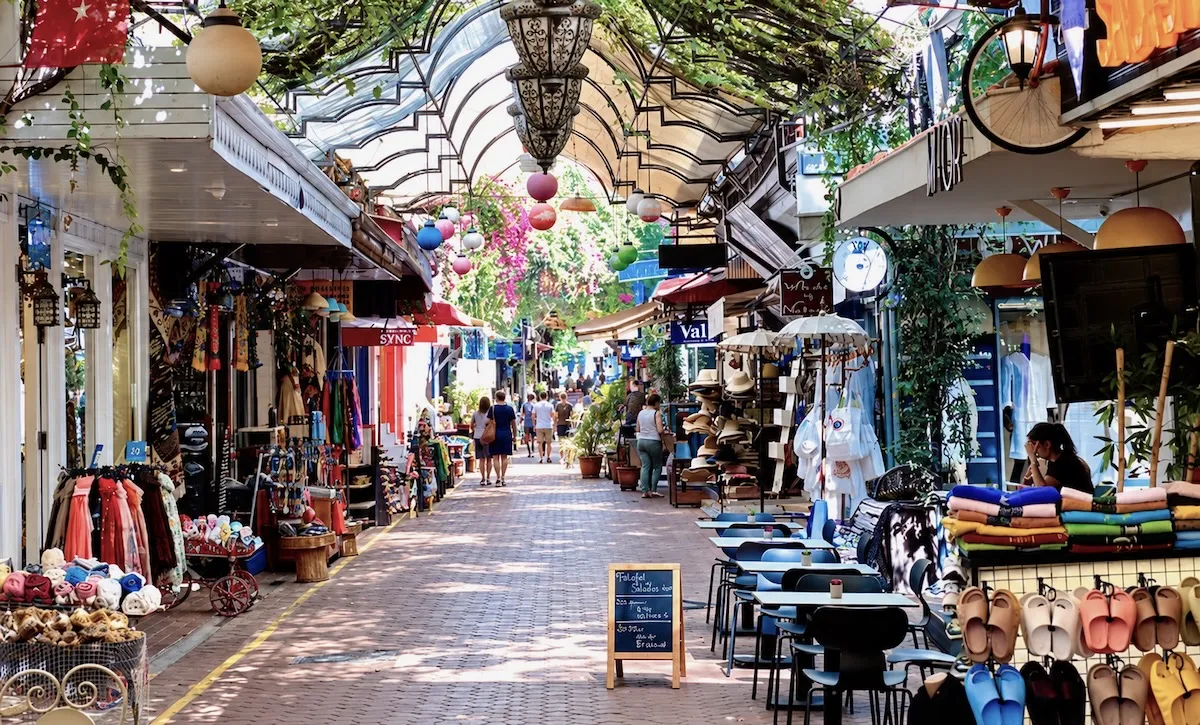
Paspatur lies a few minutes' walk east of the marina, its pedestrian lanes running between the harbour front and Çarşı Caddesi. You come here to wander, to shop and, above all, to eat.
A town rebuilt after 1957
Fethiye stands on the site of ancient Telmessos. Later known as Makri, it had a large Greek community until the population exchange of 1923, and took the name Fethiye in 1934, after the Ottoman aviator Fethi Bey. In 1957, earthquakes damaged or destroyed about 3,200 buildings, around 90% of the town.
Most of the centre was rebuilt after that. Paspatur kept some of its older streets and buildings, which is why it feels different from the rest of Fethiye.
The bazaar lanes
The lanes are lined with small shops selling leather, textiles, kilims and carpets, jewellery, spices and ceramics, with cafés and restaurant tables in between. Some stretches are shaded by awnings and climbing plants.
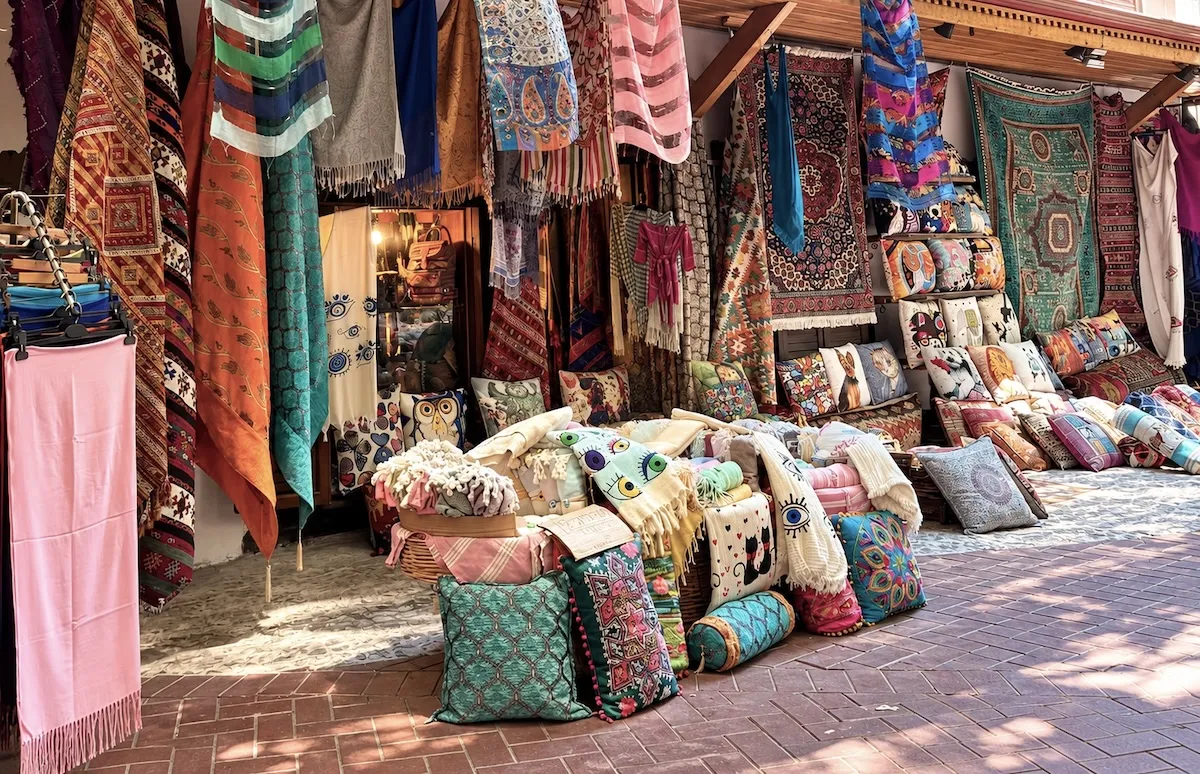
Come during the day if you want to shop at your own pace. In the evening, the cafés and restaurants fill up and the quarter is at its liveliest.
Dinner at the fish market
The fish market, the balık pazarı, is next to the old town, and it works differently from a normal restaurant. You choose your fish at the fishmongers' stalls, pay for it, and one of the restaurants around the market cooks it for you, usually with side dishes, for an extra charge.
Prices for the fish change with the catch and the season, and the cooking charge varies from one restaurant to another. Ask the restaurant how much it charges per person for cooking and sides before you order.
- How it works: buy the fish at a stall, have it cooked at a restaurant around the market.
- Tip: agree on the cooking charge per person before ordering.
Around the old town on foot
The theatre of Telmessos. The Hellenistic theatre sits on the quay, a short walk from Paspatur.
The historic hammam. The old Turkish bath, the Tarihi Fethiye Hamamı, is in the old town. Sources disagree on when it was built, and we could not confirm its current prices and hours: ask at the door.
The Lycian rock tombs. The tombs are carved into the cliff above the town, and the largest, the Tomb of Amyntas, dates from the 4th century BC. It is more than 100 steps up. 2026 visitor reports give an entrance charge of about €3 and opening from 8:30 until sunset. Go in the late afternoon.
The Fethiye Museum. The Ministry of Culture lists the museum with free entry and hours of 8:30 to 18:00, but also as closed to visitors. Check that it has reopened before you go.
- Tomb of Amyntas: about €3, from 8:30 until sunset (2026 visitor reports).
- Museum: check that it is open before going.
Getting there and when to go
From Çalış Beach, the seasonal water taxi lands at Fethiye harbour, a short walk from Paspatur. From Oludeniz, the dolmuş, the local shared minibus, takes about 25 to 30 minutes to Fethiye.
Our plan for a first visit: the rock tombs in the late afternoon, a walk through the bazaar lanes in the evening, and dinner at the fish market. For the rest of the town and the area, see what to do in Fethiye, and for somewhere to stay in town, our selection of hotels in Fethiye.
Frequently asked questions
Where is the old town of Fethiye located?
Just behind the harbour, a few minutes' walk east of the marina. The old town, called Paspatur, is a handful of pedestrian lanes between the harbour front and Çarşı Caddesi, with the fish market next to it.
Is the old town of Fethiye worth a visit when you don't have much time?
Yes, because it takes little time: the quarter is small, and an evening or half a day is enough. Combine it with the rock tombs and the theatre of Telmessos, both within walking distance, and dinner at the fish market.
What is the best time to visit Paspatur, in the morning or in the evening?
Come during the day if you want to shop at your own pace, and in the evening for the atmosphere, when the cafés and restaurants fill up. For a single visit, we suggest the rock tombs in the late afternoon, then the old town and dinner in the evening.